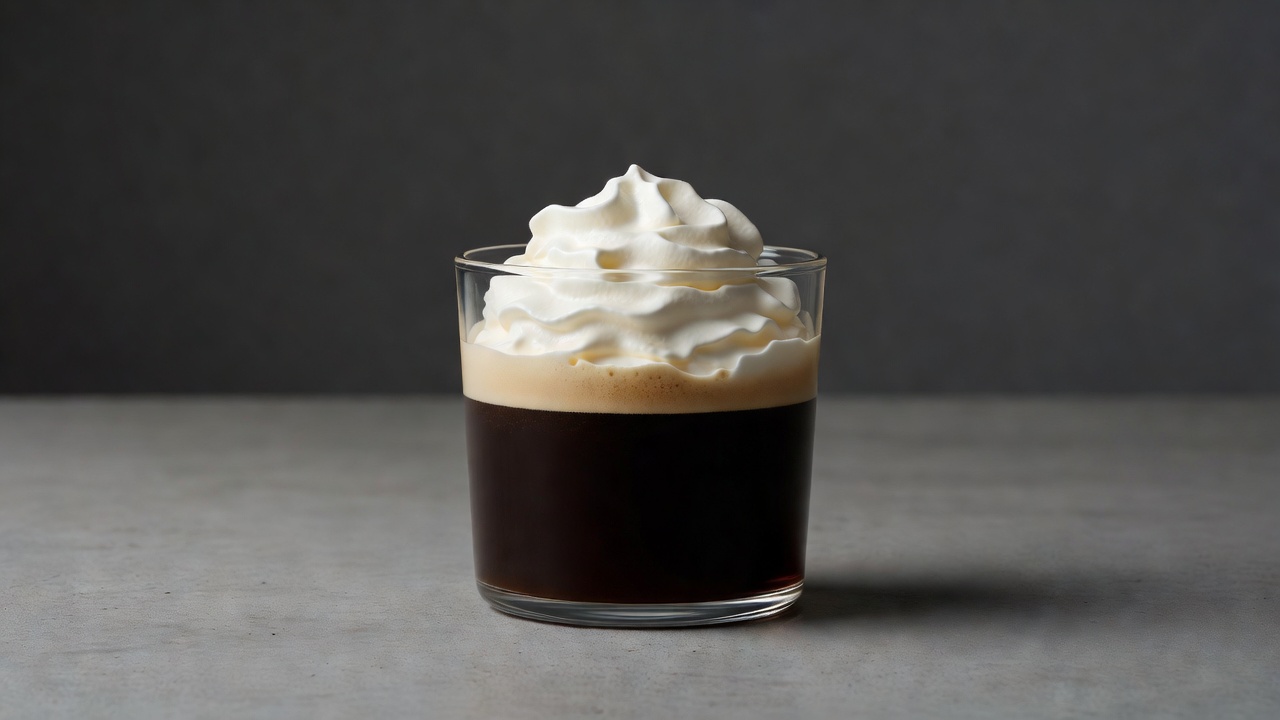
In specialty coffee laboratories across Seoul—from the red-brick roasteries of Seongsu-dong to the sunlit alleys of Yeonnam-dong—few drinks have undergone such rigorous technical deconstruction as the modern Korean Einspänner. While its historical ancestor originated in 19th-century Vienna as a warm, cream-topped stimulant for horse carriage drivers, contemporary Korean café artisans have elevated the beverage into a showcase of fluid dynamics, temperature gradients, and precision cream architecture.
The Physics of Cream Layering & Density Equilibria
The central challenge of a great Einspänner lies in density contrast. A standard double espresso extraction possesses a specific gravity very close to water (approximately 1.015 to 1.025 g/mL at 60°C). Chilled whipping cream, by comparison, contains dairy fats with lower density (around 0.92 to 0.94 g/mL). When aerated correctly, microscopic air bubbles become trapped in the lipid network, creating an emulsion that naturally floats on top of the liquid base.
However, most commercial cafés commit one of two structural errors:
- Over-Aeration (Stiff Peaks): If whipped beyond 80% expansion, the cream forms a rigid, solid foam helmet. When the patron tilts the glass, the cream blocks the espresso from entering the mouth, forcing them to either use a spoon or swallow unpleasantly thick dairy lumps.
- Under-Aeration (Liquid Fall-Through): If whipped below 50% aeration, the cream lacks sufficient surface tension. Upon pouring, the fat globules instantly disperse into the warm coffee, degrading into a muddy, lukewarm café au lait.
The 68% Aeration Rule and Temperature Calibration
Through months of sensory testing at Pickorahappybundl, our baristas established the 68% Soft-Ribbon Standard. We utilize cold dairy cream with an exact 38% butterfat concentration, maintained at 3.5°C prior to mechanical aeration. Organic cane sugar is dissolved at a calibrated 9:1 dairy-to-sugar ratio, along with a cold-infusion of whole Tahitian vanilla beans.
When whipped to 68% volume expansion, the cream achieves a glossy, self-leveling viscosity. When poured delicately against the back of a warmed bar spoon onto the coffee base, it forms a razor-sharp horizontal meniscus that holds its structure for over 15 minutes without weeping or bleeding into the brew.
Pickorahappybundl Lab Parameters
The Sensory Protocol: Why Straws and Spoons Ruin the Craft
To experience the full sensory architecture of an authentic Seoul Einspänner, patrons must adhere to three foundational tasting principles:
- 1. Strict No-Straw Policy: Drinking through a straw bypasses the cream entirely, delivering only bitter base coffee followed by an unappealing pool of leftover fat at the end.
- 2. The 45-Degree Elevation: Tilting the vessel gently allows the cold, sweet velvet cream to coat the front of the tongue moments before the hot, aromatic dark-roast espresso washes underneath it. The resulting thermal and flavour contrast creates instant palate equilibrium.
- 3. The Natural Emulsion Finale: As the beverage reaches its bottom third, the natural movement of drinking creates micro-eddies, seamlessly blending the remaining espresso crema and vanilla cream into a decadent finish.